Showing posts with label reading. Show all posts

Tuesday, June 2, 2009

"Kanye the Barbarian" or "Kanye West doesn't care about book people"


As he is apt to do, Kanye West raised quite the kerfuffle last week when he declared himself a “proud non-reader of books” (while promoting his own ludicrously slim book, no less). Kanye went on to say, “Sometimes people write novels and they just be so wordy and so self-absorbed… I am not a fan of books. I would never want a book’s autograph.”

The outcry from the writerly community has been predictable, with a lot of righteous fulmination on our culture of ignorance and the unforgivable arrogance of Kanye West. Say what you will about Kanye. Personally, I think he’s an excellent producer and decent rapper who’s adopted a manufactured messiah complex as a means of keeping his name in the headlines (The line about not wanting a book’s autograph is just too over-the-top not to be performance art), but I get why so many people have come to hate him.


I won’t go so far as to say Kanye has a point here. I don’t think he’s even trying to make a point, beyond proving that he can generate controversy by making controversial statements. But he does open the door for what I think is a long overdue conversation. Simply put, I think readers have a tendency to overvalue what they do.


Don’t get me wrong – I love reading, I love writing and I love books. In fact, I freely admit to being a literary snob. But I’m snobbish about what I read; my problem is with people who are snobbish about the very act of reading. There seems to be a prevailing idea that being a regular reader affords one a certain superiority over less bookish types. Even though I usually love any opportunity to indulge a false sense of superiority, I’m afraid I can’t completely agree.


My favorite bookstore in the world, Maple Street Book Shop in New Orleans, sells a popular bumper sticker emblazoned with the slogan “Fight the Stupids.” Much as I love the shop, I really dislike the implication that people who don’t read a lot are stupid. There are plenty of legitimate reasons for not reading much, from learning disabilities to time constraints to a basic lack of interest. Just as I know many exceptional writers who can’t spell to save their lives, I know plenty of well-rounded, intelligent people who seldom crack a book. It’s a matter of personal preference and learning style, and it’s nobody’s place to think himself better or worse because of it.


I think that strain of snobbery has hurt the institution of reading as much as any video game system or prime time reality show. The idea that books are only for nerds and eggheads was born out of centuries-old class struggles that carry on to this day. It’s perfectly natural for readers to have a defensive reaction when someone bashes books, but that shouldn’t manifest itself in disdain for those who don’t know David Foster Wallace from David Alan Grier. It’s something of a tyranny of the minority: a relatively small population of voracious readers has long convinced the world that those who don’t care for books are illiterate morons, and that’s too bad. In my experience, heaping shame on people for what they’re not is one of the least effective methods of changing their opinions.


Of course, I don’t believe that not reading is anything to be proud of. If I thought Kanye was doing anything but playing a role, I’d agree that he deserves chastisement for that part of his statement. But think of it another way – if Kanye had called himself a “proud non-watcher of television,” would it have generated the same kind of backlash? I strongly doubt it. In fact, he’d probably have been heralded as a positive influence by the “Kill your television” contingent.


I’ve never understood the knee-jerk “books good, TV bad” mindset. I’ve had intense, life-enriching experiences while enthralled by books, TV shows, movies, albums, paintings, graffiti tags, what-have-you. I’ve also been repulsed and scarred by all of the above. It’s all art, and none of it is inherently better or worse than the rest. Scrolling through any given New York Times best-seller list will reveal a slew of books that I’d consider far less life-enriching than most of what I watch on TV.


Would the “television rots your mind” set really try to tell me that my brain cells would be better served by reading Tucker Max’s I Hope They Serve Beer in Hell (#4 in paperback nonfiction this week) or Steve Harvey’s Act Like a Lady, Think Like a Man (#1 in hardcover advice) than by engaging the brilliant screenwriting of shows like The Wire or The Venture Bros? And even beyond disposable volumes like Max’s and Harvey’s, there’s some truth to Kanye’s statement: plenty of roundly acclaimed authors really do be so wordy and self-absorbed (I’m looking at you, John Irving). Television at its best is just as valid and worthwhile as any literary format, but somehow bashing TV is seen as meritorious, while dismissing books approaches heresy.


At the bottom of it all, I’m sort of glad to see that comments like Kanye’s can still spark such a vehement response. I’m a great supporter of the written word, and it’s nice to see that so many people still defend literature with such gusto. That gives me hope for the days when my own books finally see print. At the same time, I think we could all stand to chill out and take stuff like this a tad less seriously. The world already looks at the literati as a bunch of uptight blowhards. Looking down our noses at non-readers and whipping up tempests in every passing teacup does little to combat that image.


But don't get me started on Kanye's off-hand dismissal of Twitter. Them's fightin' words!


- Ira Brooker

Monday, February 9, 2009

My name is Ira, and I am a pretentious reader.

So I’m riding the stationary bike at the gym the other day, listening to Django Reinhardt and reading Virginia Woolf, and it occurs to me that I could very easily be taken for a pretentious twat.

I do not believe myself to be a pretentious twat, but I have to admit that there could be reasonable grounds for that assumption. I am terribly self-conscious about my public literary consumption. If I know that I am going to be reading in a setting where I might be seen – the gym, for instance, or a city bus – I take care to choose a book that will reflect well on my taste.


Yes, I’m the guy on the train with his nose buried in William Faulkner’s Soldier’s Pay or Robertson Davies’ Fifth-Business. I don't think these choices are genuinely pretentious because these are the kind of novels and authors that I genuinely enjoy. If you see me poring through Willa Cather’s The Professor’s House, it’s not because I want to show off my highbrow tastes. It’s because I want to see if Cather’s lesser-known work lives up to the spare beauty of My Antonia. (Answer in this case: not so much.)


Still, though, I worry that my attempts at keeping up appearances sometimes get the better of me. I read Thomas Harris’ Red Dragon a few years back - certainly no great work of literature, but quite enjoyable and eminently readable. Surely there’s nothing wrong with devoting a summer’s week to the overwritten antics of Hannibal Lecter and friends, right? And yet I only dared crack the pages of Red Dragon while hidden away in my apartment, safe from the leering eyes of strangers. On my lunch breaks at work, I substituted Knut Hamsun’s far more cerebral Hunger.


Now how likely is it that anyone wandering past the bench outside PJ’s Coffee & Tea on Tchoupitoulas Street in New Orleans would have glanced down at me and thought, “What a bright and studious young man he must be, to devote his break time to a classic of Scandinavian existentialism”? Conversely, what are the chances a passerby would have noted my engagement with Thomas Harris and thought, “Pfft, just another sheep blowing his brain cells on a bloated best-seller”? In both cases, I’d say slim to none. And even if my hypothetical observer did exist, what should his or her opinion matter to me?


Quite a lot, apparently. The cold, weird fact is that I have consistently allowed a mythical notion of public opinion to impact my choice of reading material. It goes at least as far back as middle school, where I scoffed at teachers’ suggestions of Gary Paulsen and Judy Blume and instead immersed myself in Ken Kesey and Ernest Hemingway. Sure, the themes these authors dealt with far outstripped my sheltered, pre-teen psyche, but I genuinely enjoyed their stories. Just as important, they fed my burgeoning sense of superiority over my less advanced peers. Hm… In hindsight, that sounds like the thought process of a pretentious twat.


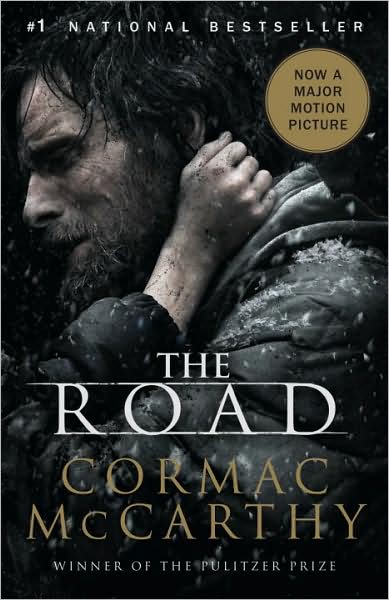
It has its down sides, this elitism of mine. At age 30, I’ve never read a book by Stephen King, John Grisham, Michael Crichton or most of my era’s other best-selling authors. I’m left out of conversations about The Lovely Bones and The Kite Runner, just because I can’t bear to be seen reading a book that’s available at my local Starbucks. I was recently mildly embarrassed to read Cormac McCarthy’s The Road at the gym. You’d think I’d have no worries about being spotted with a universally acknowledged masterpiece by one of my favorite novelists of all time, but I feared I’d be taken for a bandwagon-jumper who’d picked the book up because of press coverage and the brooding photo of Viggo Mortenson on the cover. At least my edition didn’t have the dreaded Oprah seal of approval.


I acknowledge that I have a problem. I am fully aware that this is neither a normal nor a rational handling of my literary life. But I can’t see myself changing anytime soon. In fact, I’m not sure that I want to. The world needs pretentious twats like me, if only to set a bad example. And I’m working my way through some phenomenal books, so it’s hard for me to feel too bad.


So if you spot a guy at your local gym pedaling furiously with To the Lighthouse propped up in his sweaty palm, that might be me. It’s probably best if you just ignore me. I don’t need the encouragement.

Monday, December 22, 2008

Recent Readings: "Marabou Stork Nightmares" by Irvine Welsh

Irvine Welsh’s Trainspotting changed my life. Well, I suppose it would be more accurate to say that John Hodge and Danny Boyle’s adaptation of Irvine Welsh’s Trainspotting changed my life. I first saw the film when I was 17, the night it opened at the King Theater in downtown La Crosse. As a clean-living country boy from rural Wisconsin, there’s no reason I should have connected so intensely to the antics of a bunch of heroin-addled Scots, but for some reason the adventures of Renton and company just hit home for me. I saw the movie six times in the theater and stole a copy of the video as soon as it was released.

I held off on reading the book for more than a decade, largely because I was repeatedly told that it was much better than the film. It may sound odd, but I loved the movie so much that I didn’t want to tarnish it by viewing its superior source material. Of course, when I finally broke down and read the book, my friends were proven right. Welsh’s novel is absolutely amazing, one of the finest works of literature written in the last few decades. The characterizations, the use of dialect, the shifting points of view – it’s all brilliantly done and endlessly readable.

Not long after I finished Trainspotting, I was offered a chance to share a stage with Irvine Welsh at a public reading (thanks, Sexy Bald Men!). It was a hell of a rush, even if Welsh’s accent rendered most of his reading indecipherable for me. After the show, I violated all of my self-imposed fanboy laws and gushed my praise all over him. I didn’t even do that when I saw John Goodman at a sushi restaurant, and that dude was Walter Sobchak, for god’s sake!

All of this needlessly in-depth preamble just serves to show how hyped I was for Marabou Stork Nightmares, my first encounter with Welsh outside of the Trainspotting vernacular. I picked it out of a small array of Welsh novels at Crow Books in Burlington, Vermont based mainly on the unique premise: it’s told from the perspective of Roy Strang, a coma patient who constantly blurs the grim facts of his waking life with the exciting fantasy world he’s constructed within his head.

Reading this book turned out to be an exhilarating, horrifying, nauseating experience. It’s an excellent novel in just about every respect, but also one I wish I could block from my memory. The story of a bright but profoundly damaged young man who’s been raised to associate violence with love, sex, self-worth and nearly every other facet of his life, this is one of the grimmest books I’ve ever read. The stories of the Strang family’s extremely dysfunctional home life are hard enough to take – Roy’s ongoing campaign of sadism against the family dog is especially cringe-worthy – but it’s an excruciatingly long and graphic rape scene that truly pushes this into nightmare territory. I won’t provide any spoilers, but I’ll say that I’ve never before been so intensely horrified by a passage of fiction.

Unpleasant though it is, Marabou Stork Nightmares is eminently worthwhile because the brutality never comes off as extraneous. It’s a story of abuse and neglect at every level, from personal to societal. Welsh’s narrative is disturbing because it has to be. Pulling any punches would dilute the horror of Roy Strang’s existence and the impossibility of his attempts to escape into his homemade world of adventure. Even the traumatizing rape sequence is well-earned. As much as I found myself wishing Welsh would back off and spare me just a few ugly details, I had to respect his decision to spell everything out in its vicious totality. "Shock value" generally has a negative connotation, but that's only because many writers emphasize the shock at the expense of the value. Welsh's approach underlines the heinous nature of sexual assault and augments one of the book’s most important themes, the futility of trying to escape reality.

All told, Marabou Stork Nightmares solidifies Irvine Welsh’s status as one of my favorite living authors, but it also made me resolve to take a break from grimness and read something a little more uplifting. To that end, I promptly embarked on Cormac McCarthy’s feel-good, Oprah-endorsed father-son romp The Road. After Marabou Stork Nightmares, that one was a regular laugh riot.

- Ira Brooker